
Have you ever been to the doctor and felt rushed throughout the whole process? You waited for close to 30 minutes to be seen, only to walk out of the doctor’s office more confused than you were when you first walked through the doors. Or even worst, you received devastating news from the doctor with very little comfort or hope for the future. Doctors are sworn under an oath to provide the best medical care to their patients but it seems that as time progresses the oath isn’t held in high esteem.
In today’s society, empathy and compassion are two emotions that we seem to lack. This isn’t me pointing the finger at anyone in particular, because I believe that we could all work on the dynamic duo. Everyone is so concerned about, “what’s in it for me?”, that we forget the basics of human decency. Like the famous saying that many of us have heard since we were children, “Do unto others, as you would like to be done unto you.” Well, how can we do that if we aren’t feeling at all? Society also teaches us that when feeling becomes too emotionally draining, it’s okay to turn it off. Again, I am guilty here as well. I have turned off my feelings more than I would like to admit as a defense mechanism to protect myself from the emotional highs and lows of life. But is that really what life’s about? Not feeling, just existing? Once you stop feeling for others and yourself, it begins to affect your character or lack thereof. You may be wondering where I’m going with this, but I’ll get to my point…eventually.
Recently, I took a class on LinkedIn Learning titled, “How to Speak So That People Will Listen”. I learned that to be a good speaker, you must first master the art of listening. Oxymoron, right? If you’re the speaker, why do you need to listen? You’re the person with all the knowledge and understanding on the particular subject, why would you need to listen to your audience? Well it is simple, how would you know what people wanted to hear or learn if you don’t ask them about their concerns? Without listening and understanding where the audience is lacking, the speaker then assumes what the audience wants to hear and projects their biased feelings onto them. In some instances, there are times when the speaker has to just teach the material, but for the doctor and patient relationship, this is not the case.
Listening requires empathy and compassion. To actively listen, it requires your undivided attention. Wow!! Undivided attention, in today’s world where everyone is accustom to multi-tasking!! We cook and talk on the phone, play with our children and answer emails for work, exercise and listen to music, watch TV and browse the internet, etc. Yeah, that stepped on all ten of my toes and all ten of my fingers, too. Multi-tasking has its’ benefits, but it probably isn’t the best choice to make while listening to someone. Especially someone that needs your attention; more specifically, someone that’s paying for it.
I remember when I was a child, my doctor wasn’t just my doctor, but more like a family member. When it was my time to be seen, my parents and I had his undivided attention. However, I’ve felt the opposite in my adult years. From the time leading up to my MS diagnosis until now, I can count on one hand and remember the doctors by name that actually listened to my thoughts, feelings, and concerns. Either they were playing God and predicting my future of being wheelchair bound and severely disabled, pushing medications on me, or telling me how I feel. For example, shortly after having my daughter, I started taking an MS medication. I will not be disclosing the name of the medication because what didn’t work for me, may be a perfect fit for you and I would never want to discourage anyone from getting the proper care. Three months into taking the medication, I didn’t feel like myself. I am an upbeat person by nature, but when taking this medicine, I became so depressed to the point that I struggled to get out of bed. I didn’t want to shop or do any of the things that I normally enjoyed doing. I was confused and very forgetful of things that I typically remember. I contacted my Neurologist (at the time) to inform him that I believed the medication was altering my personality. I received a call back from his nurse practitioner and she informed me “that wasn’t a side effect of the medication”. She didn’t explain to me that everyone’s body is different or even attempt to come up with a better solution. She just flat out said, “that’s not a side effect of the medication.” Long story short, I started to do research on the medicine and read forums online, where I saw many comments from people who were having similar issues. I also, was very fortunate to connect with someone who was taking the same medication, and experiencing the similar symptoms. Now, I’m not fortunate that this individual was going through a rough time, but our pain brought us together where we didn’t feel so alone.
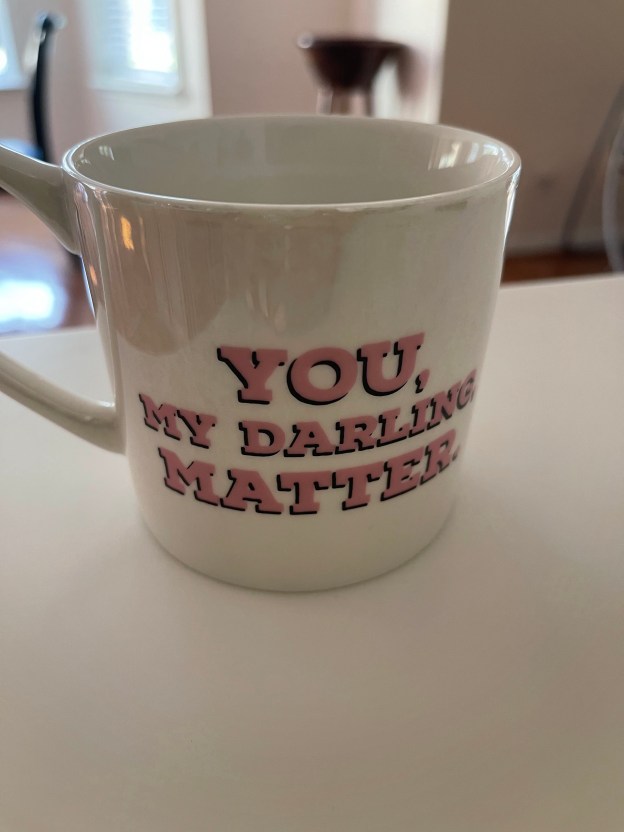
At the end, I switched Neurologist and discontinued the medication. My associate discontinued the medication as well. I’ve learned so much since my MS diagnosis, but what I’ve learned from this particular chapter was “sometimes when you want to expose the truth, it requires some digging.” Do the research and reach out to people. Keep a notebook to date and log your symptoms. Write down all your questions/concerns, and present them to the doctor. Don’t back down. Ever!! You’re not just a number, YOU MATTER!! Data and statistics are important, but YOUR individual needs MATTER. If your doctor doesn’t realize that and wants to fit you into a category, find another doctor because there’s a doctor out there for you. Peace and Blessings to you all.
Happy New Year!! Let’s make this year one to go down in the books.
 With Pain Comes Strength, Multiple Sclerosis (MS) Awareness